
Wait — take 15% off your first order.
Join the First Look Club and see new designs before anyone else.

When I was in fifth grade and my brother in seventh, my family moved us to a new school in a nearby suburb. Nearly all mom earned from her part time job went to paying our tuition. The previous school had no dress code: wear what you want, and I basically looked like the other kids. I fit in. The new school required a uniform, which on paper, sounded like a great equalizer. Everyone in the same plaid. Everyone the same.
It did not work out that way.
That school was full of kids from wealthy families. This was a much different world than I was used to, and the uniform did nothing to hide it. The girls had the right shoes (penny loafers and dock shoes), the right crisp white blouses, the right monogrammed sweaters, and shiny hair pulled back in french braids with painted barrettes. I walked in that first day in the same plaid, and the wrong everything else. Turns out a uniform has nothing to do with fitting in, and I was a living in a John Hughes film.
I got lucky and found some good friends early on, so school itself was fine. But I was stuck in plaid through the end of high school. While I found my niche and did well in my studies — I never settled in to the forced conformity of a uniform.
During these years, I was starting to figure out that I was good at art, which is its own kind of education in not following the rules. It ran in the family — my mom and her whole side are artists and crafters, and my grandma was a seamstress. Making things was just what happened around me, all the time. I’d been getting praise for my art from family since I was small, but it started to feel like something real when teachers and classmates began noticing too. At that private school, I was picked to draw caricatures at the school fair. Looking back, they were not great, but also not bad for a sixth grader. Around that same time I started my first business venture, hand-painting barrettes and selling them in a local gift shop. By the end of high school, I’d decided to study art in college, which eventually led to a career in graphic design, web design, and illustration.
While wanted out of the uniform, the rules, and the plaid, it led to me bursting out and making my own version of things. And – while it took a few decades, I finally got to make that plaid my own.

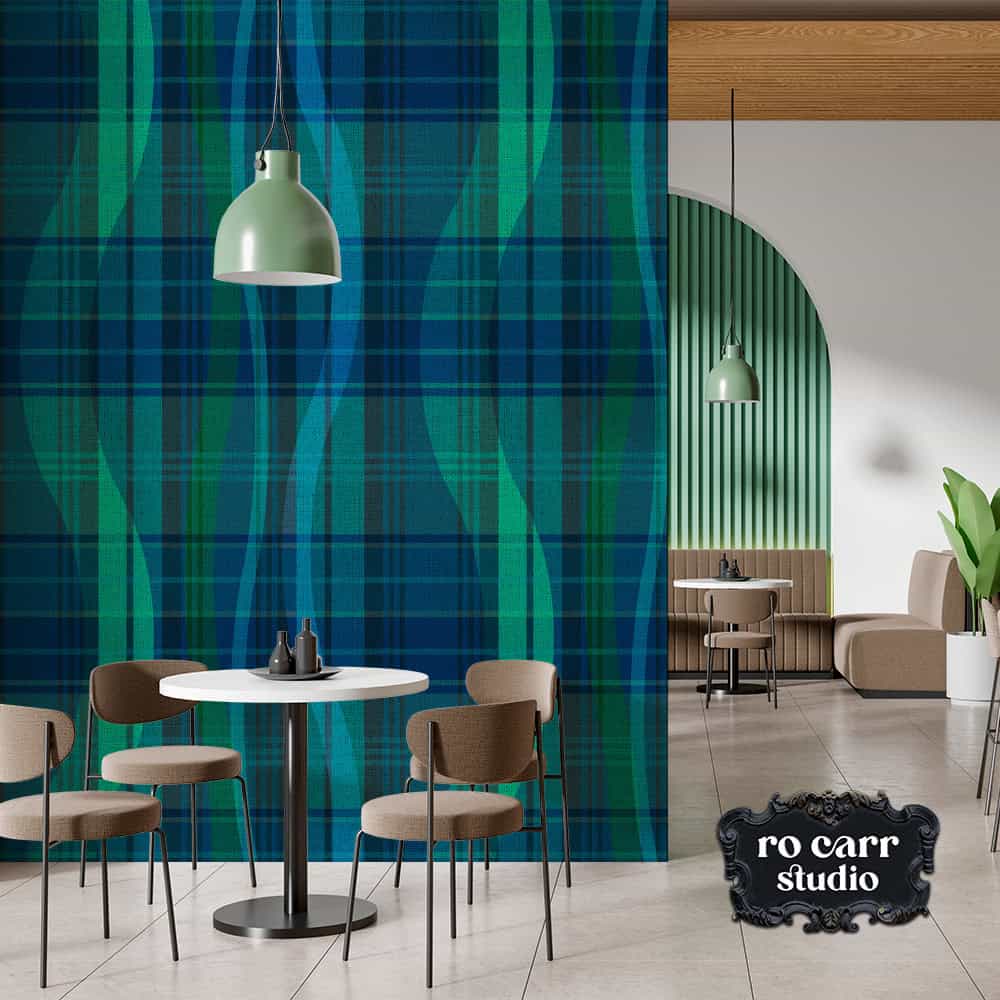
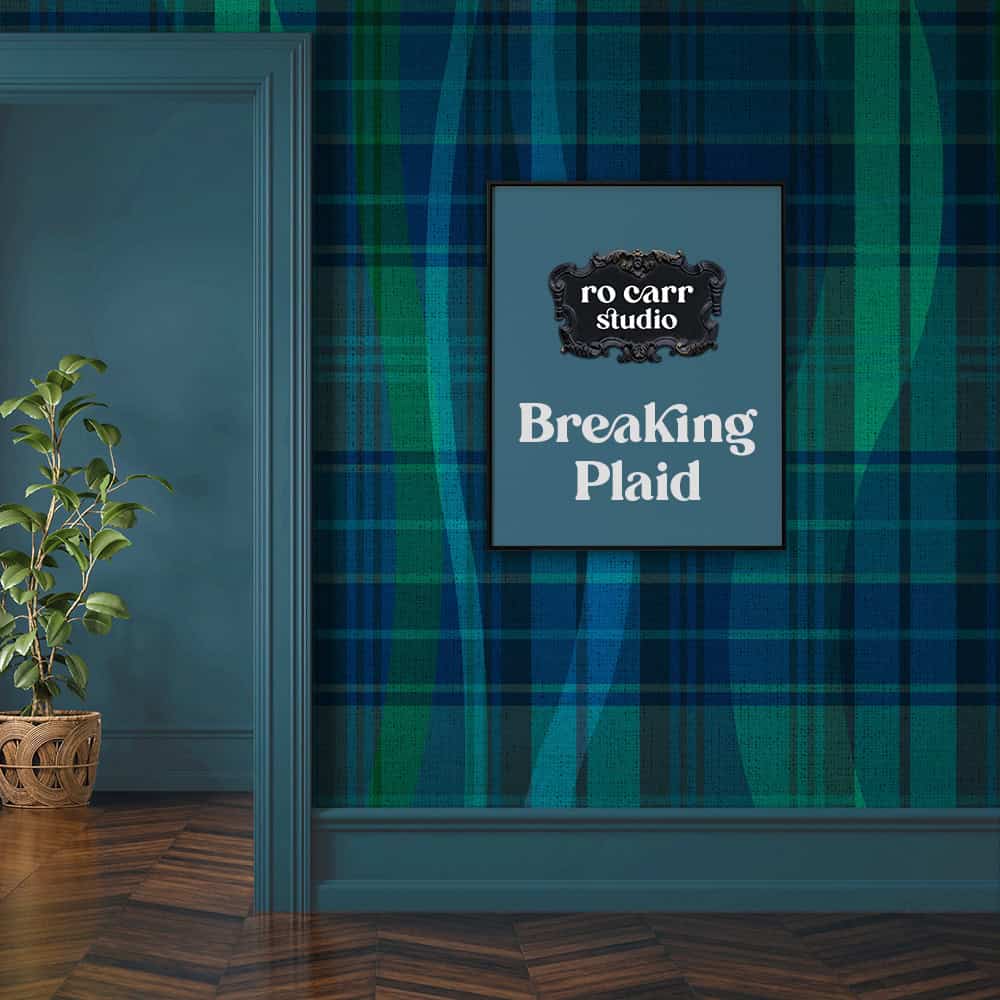

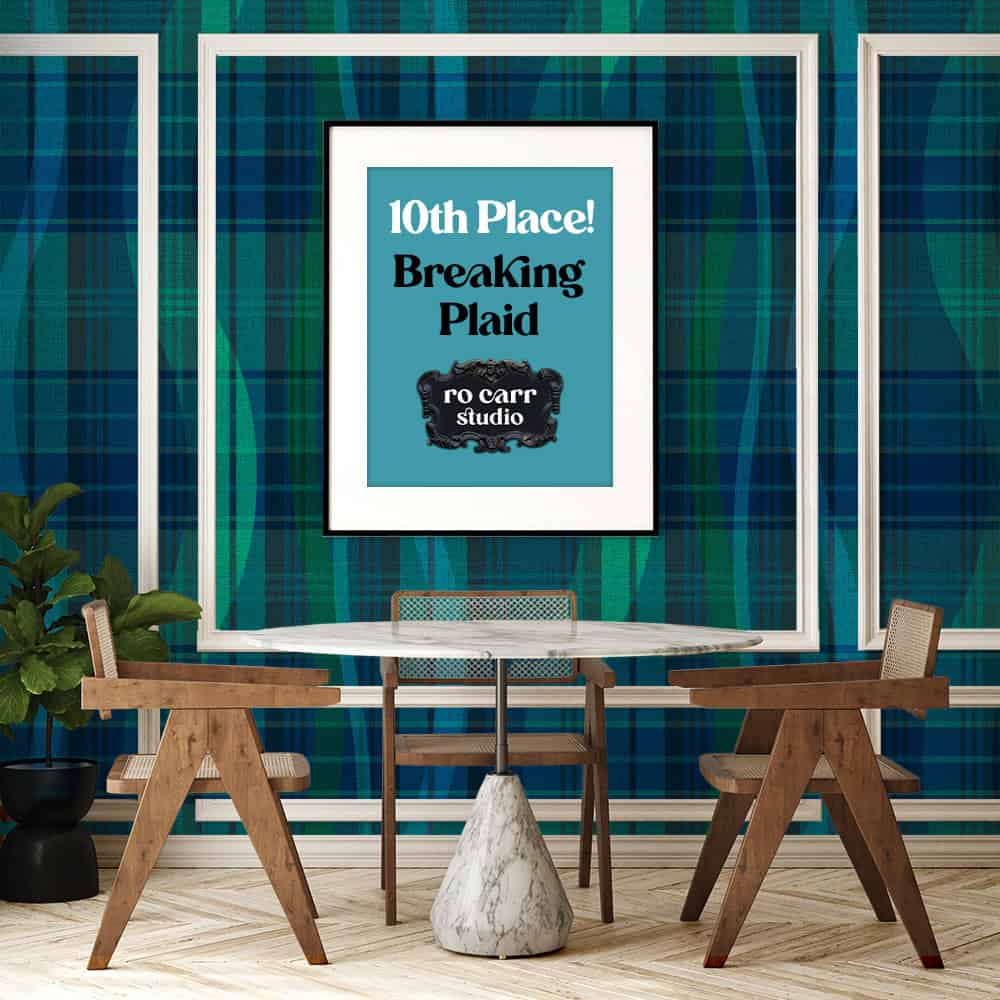
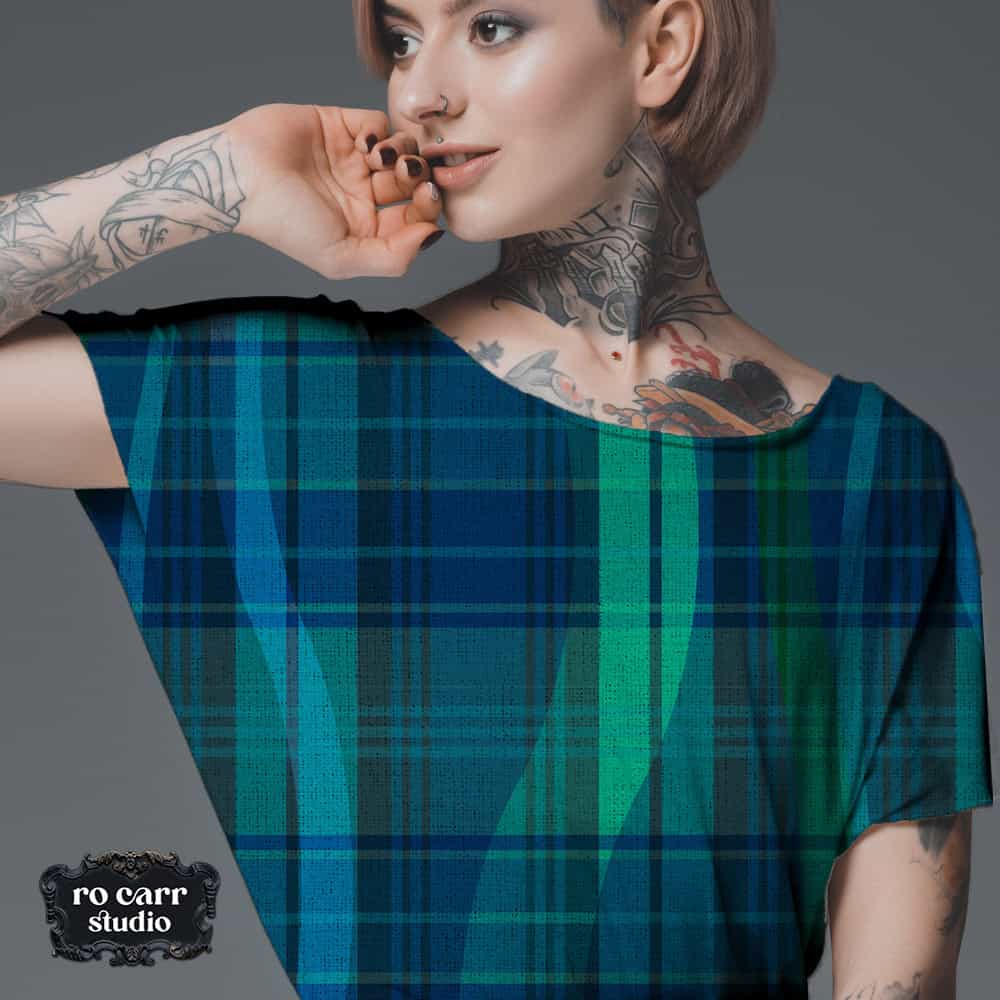
Breaking Plaid takes a traditional Black Watch tartan grid — the same deep navy and forest green I wore for the better part of a decade — and runs fluid wave lines straight through it, cutting across the strict crosshatch like the structure finally gave up trying to hold still. The traditional tartan is recognizable: the grid, the crossing verticals and horizontals, the woven-linen texture. But the addition of waves imbue a restlessness the original pattern was never allowed to have.
It’s a plaid I’d actually choose to wear. Which, if you’d told ten-year-old me that would eventually feel like a victory, I would not have believed you.
Breaking Plaid is available now as fabric, wallpaper, and home goods, with more products on the way.